
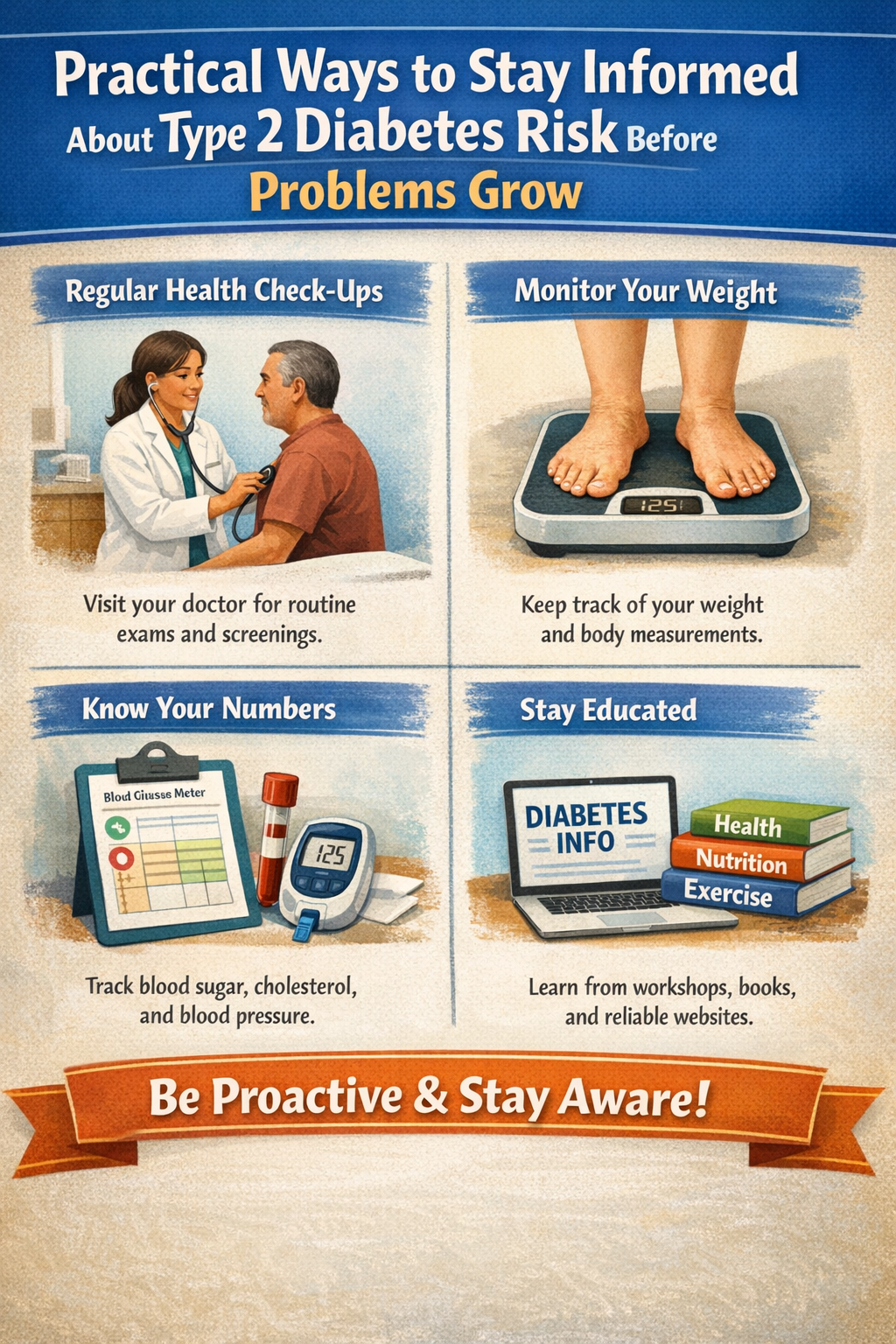
Article Title: Practical Ways to Stay Informed About Type 2 Diabetes Risk Before Problems Grow
Prevention and early awareness are often central to discussions about type 2 diabetes. Many long-term health conditions develop gradually, which is why paying attention to patterns early can be so valuable. Prevention does not require fear or extreme changes. In many cases, it begins with understanding personal risk factors, noticing routine habits, and speaking with a healthcare professional when questions arise.
One of the most useful parts of prevention is awareness of personal risk patterns. This may include family history, body weight changes, physical inactivity, sleep problems, or other health markers such as blood pressure and cholesterol. A person does not need to wait until symptoms become obvious to begin paying attention. In fact, regular checkups and early conversations may be more useful before major concerns appear.
Healthy eating patterns are often part of prevention discussions. Rather than focusing on strict rules, many experts encourage balanced, sustainable routines. This may include regular meals, more whole foods, attention to portion size, and reduced reliance on highly processed items and sugary drinks. The goal is not perfection, but a pattern that supports long-term wellness.
Movement also plays an important role in early prevention efforts. Regular physical activity can support general metabolic health, help maintain a healthy body weight, and improve overall energy. This does not always require a formal exercise plan. Walking more often, reducing long sitting periods, and adding moderate movement throughout the day may all be helpful ways to support healthier routines.
Screening and routine medical care are also important parts of early awareness. Some people assume they only need to speak with a doctor if they feel unwell. However, type 2 diabetes risk may be easier to address when it is recognized early through general health monitoring. A routine checkup can provide an opportunity to review family history, discuss lifestyle patterns, and ask whether blood sugar testing or other assessments make sense.
Early awareness also includes noticing subtle changes in day-to-day health. Increased thirst, fatigue, changes in appetite, more frequent urination, or unexplained shifts in weight may all be worth discussing with a healthcare professional. These signs can have different causes, but they are useful to mention rather than ignore. Paying attention does not mean assuming the worst. It simply means being informed and responsive.
Another helpful approach is to think about prevention in small, realistic steps. Many people feel overwhelmed when they believe they need to change everything at once. A more practical mindset is to identify one or two areas that can be improved consistently. This might mean preparing meals more regularly, walking after dinner, improving sleep habits, or reducing sweetened drinks. Small habits can become meaningful when they are repeated over time.
Stress management may also support preventive efforts. Ongoing stress can affect sleep, eating habits, and motivation for physical activity. While stress cannot always be avoided, understanding its effect on daily routines can help people make more intentional choices. Even modest improvements in routine can support better long-term health.
People may also benefit from asking direct questions during checkups. For example, they may ask whether they have any known risk factors, how often screening should take place, and which daily habits may matter most in their situation. These questions can make prevention more specific and easier to apply in real life.
Prevention and early awareness are not about trying to control every detail of health. They are about recognizing patterns early, making steady choices that support well-being, and using regular medical guidance when needed. For many people, this balanced approach offers the clearest path toward understanding and managing type 2 diabetes risk over time.