
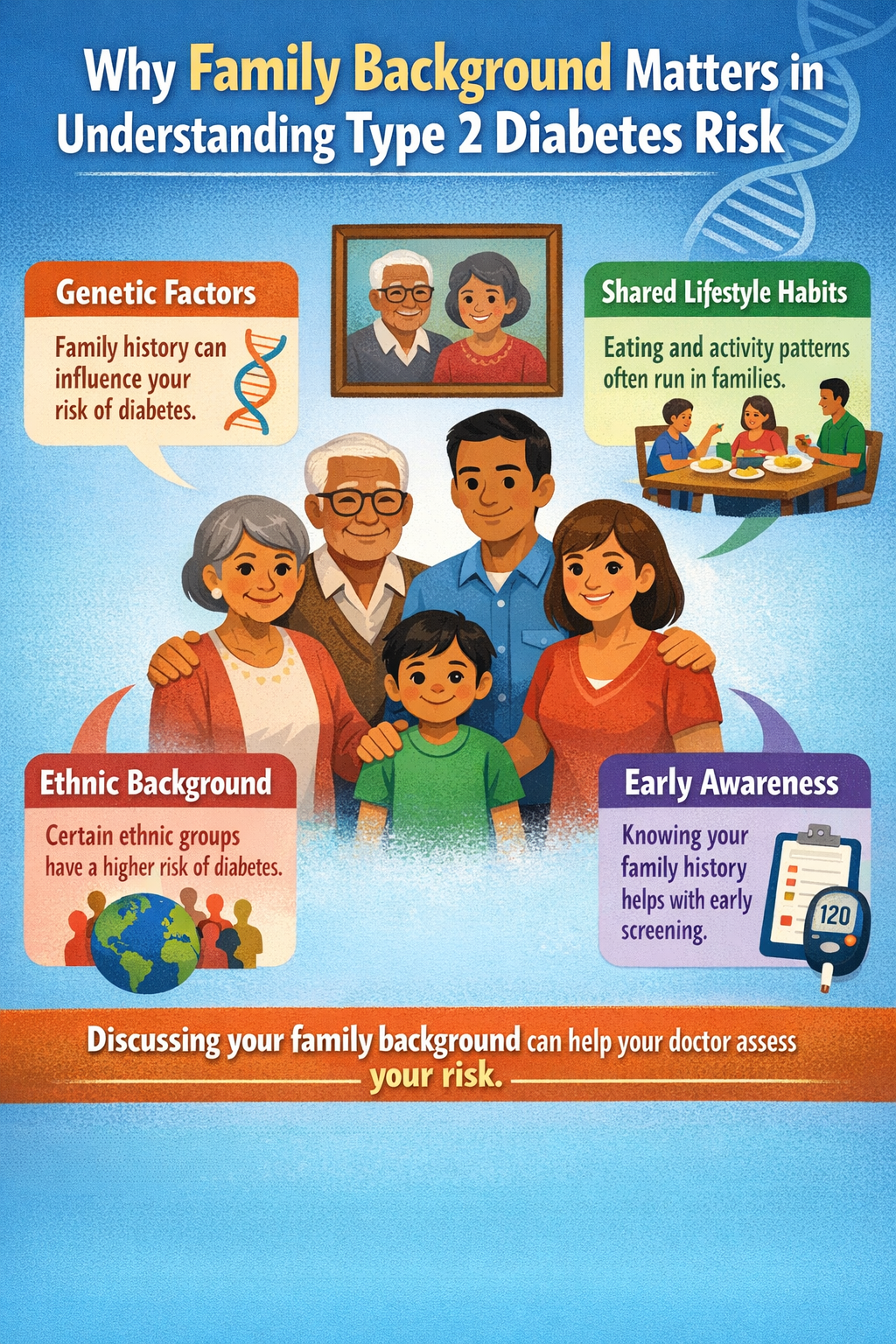
Article Title: Why Family Background Matters in Understanding Type 2 Diabetes Risk
When people think about type 2 diabetes, they often focus first on food choices, exercise, or body weight. While those factors are important, family background can also play a meaningful role in understanding risk. Knowing whether close relatives have had type 2 diabetes may help place personal health questions into context and support more informed conversations with a healthcare professional.
Family history does not guarantee that a person will develop type 2 diabetes. At the same time, it can be one of several important factors that shape overall risk. If parents, siblings, or other close family members have been diagnosed with the condition, it may suggest a greater need to pay attention to long-term health habits, routine medical checkups, and common warning signs related to blood sugar balance.
Inherited traits may affect how the body responds to insulin, how easily blood sugar levels rise over time, or how likely someone is to develop certain metabolic changes. However, genetics usually work together with lifestyle and environmental influences rather than acting alone. This means that a person with a family history may still support their health through consistent daily habits and regular monitoring, while a person without that history should not assume there is no risk at all.
Many people do not know the details of their family’s medical history, especially when older relatives were not formally diagnosed or did not speak openly about their health. That is why even partial information can still be useful. If a person knows that diabetes, blood sugar problems, or related metabolic issues have been common in the family, it may be worth mentioning during a routine health appointment. Doctors often look at patterns across generations as part of a broader health review.
It is also helpful to understand that family history may be connected to shared habits as well as inherited biology. Families often have similar eating patterns, daily routines, stress levels, and attitudes toward exercise and preventive care. In that sense, the influence of family background may come from more than one source. A doctor or health educator may consider both inherited and lifestyle-related patterns when discussing risk.
People with a family history of type 2 diabetes may benefit from being especially aware of gradual changes in energy, thirst, weight, appetite, and general well-being. These changes do not automatically point to a specific condition, but they may still deserve attention when viewed together with family background. Early awareness can make health conversations more practical and better informed.
Another useful step is to ask relatives, when appropriate, about general health patterns in the family. Questions about diabetes, high blood pressure, cholesterol problems, or heart-related concerns may provide valuable background. This does not have to become a source of worry. Instead, it can be seen as a way to better understand personal health and prepare for more meaningful discussions during regular medical visits.
Doctors may also ask whether family members developed type 2 diabetes earlier or later in life. This kind of detail can sometimes help frame the conversation, especially when combined with current lifestyle habits and personal health history. Even if a person feels well overall, having this information available can support more complete preventive care.
The key point is that genetics are only one part of the picture. Family history can raise awareness, but it should not lead to fear or the assumption that the future is already decided. Many health outcomes are influenced by a combination of risk factors, habits, and ongoing care. Understanding family background simply gives people more information to work with.
In the end, family history and genetic factors are best viewed as tools for awareness rather than prediction. They can help people ask better questions, schedule regular checkups, and pay closer attention to long-term health patterns. When used in a balanced way, this knowledge can support better health decisions without creating unnecessary alarm.