
Article Title: Why Body Changes and Overall Health Matter in Type 2 Diabetes Risk Discussions
When discussing the risk of type 2 diabetes, it is common to hear about body weight, age, and general health. These topics are often connected because they can influence how the body regulates blood sugar over time. However, they should be understood carefully and in context. Risk is rarely based on one factor alone, and health conversations are usually most helpful when they focus on patterns rather than assumptions.
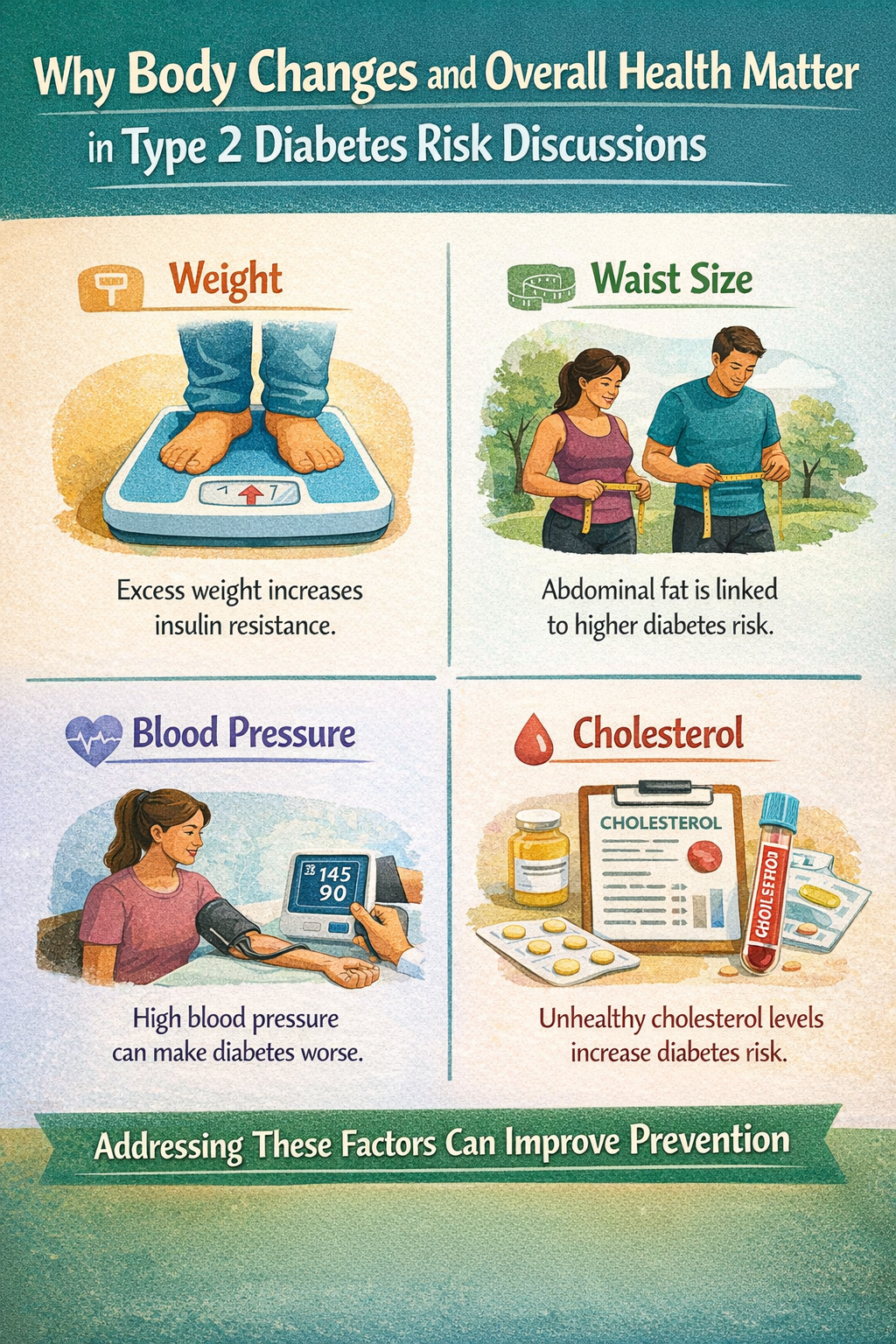
Body weight is one of the most widely discussed subjects in relation to type 2 diabetes. Excess body weight, especially around the abdomen, is often associated with changes in insulin sensitivity. At the same time, weight is only one part of a larger health picture. Two people with similar body size may have different activity levels, eating patterns, family histories, and metabolic markers. That is why doctors usually consider weight as one factor among many rather than a complete explanation.
It can also be helpful to talk about weight changes over time instead of only current weight. Gradual weight gain over the years, sudden unexplained changes, or repeated cycles of losing and regaining weight may all be relevant in a health discussion. Looking at trends can often provide more useful information than focusing on one number from a single appointment.
Age is another factor that may influence risk. As people get older, the body may respond differently to changes in activity, sleep, stress, and diet. Muscle mass may shift, daily routines may become more sedentary, and other health conditions may become more common. These changes do not guarantee that type 2 diabetes will develop, but they can make regular screening and preventive attention more important over time.
General health markers also deserve attention. Blood pressure, cholesterol, liver-related concerns, and waist circumference may all be part of a broader metabolic health assessment. A doctor may review these areas because type 2 diabetes risk often overlaps with other long-term health concerns. Looking at several indicators together can offer a more complete view than considering blood sugar alone.
Physical fitness is another important part of the conversation. A person’s risk profile is not defined only by the number on a scale. Daily movement, cardiovascular fitness, strength, and sedentary time can all influence overall health. Someone who is physically active may have different health patterns than someone with the same weight who spends most of the day inactive. This is one reason why doctors often ask about routine movement and not just body measurements.
It is also important to approach these topics without judgment. Health-related conversations can become unhelpful if they focus too heavily on blame. A more useful approach is to ask what factors may be influencing current health and what practical steps may support improvement. Weight, age, and general health should be seen as areas to understand, not labels that define a person.
For many adults, routine checkups become especially valuable as the years go by. Even when no clear symptoms are present, screening may help identify changes early. This can be particularly helpful for people who also have a family history of diabetes, reduced physical activity, or other metabolic risk factors. Early awareness often creates more room for supportive lifestyle adjustments and informed follow-up.
Some people avoid discussing weight or age because they assume the conversation will be overly simplistic. In reality, a thoughtful medical discussion can be more balanced. A good healthcare conversation takes into account personal history, daily habits, and overall health trends. Asking questions about which markers matter most and how often they should be monitored can help make the discussion more practical.
Understanding weight, age, and general health is not about predicting the future with certainty. It is about recognizing which factors may contribute to risk and which areas deserve regular attention. When people stay informed and engaged with their health over time, they are often better positioned to make realistic and supportive choices.