
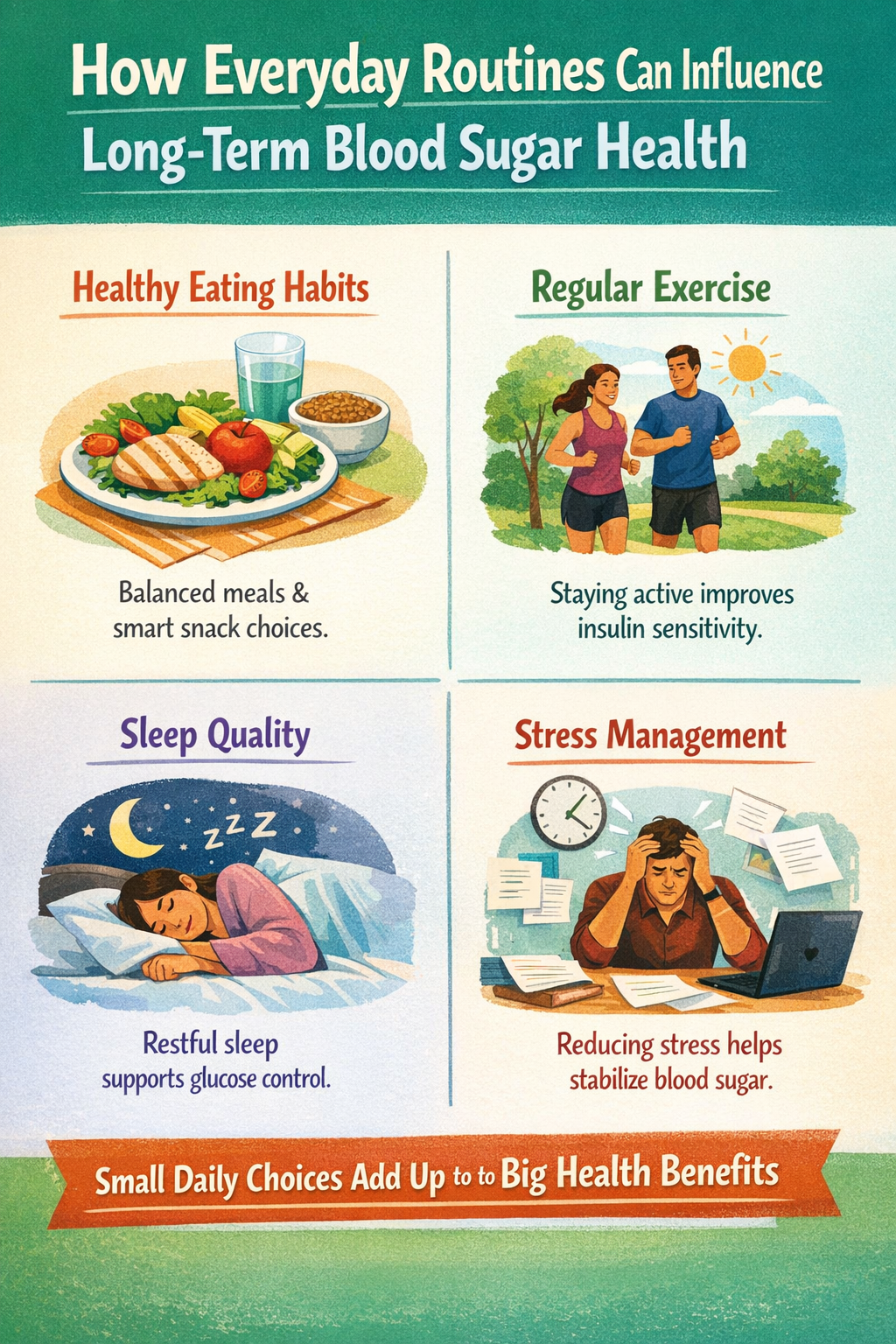
Article Title: How Everyday Routines Can Influence Long-Term Blood Sugar Health
Type 2 diabetes risk is often discussed in connection with daily routines, and for good reason. The way people eat, move, sleep, and manage stress can shape overall metabolic health over time. While no single habit tells the full story, everyday patterns may influence how the body handles energy, insulin, and blood sugar. That is why lifestyle is such an important part of the conversation.
One of the first areas to consider is physical activity. Regular movement helps support general health in many ways, including the body’s ability to use glucose more effectively. This does not mean a person needs an intense workout routine to make a difference. Walking, household activity, stretching, cycling, and other forms of consistent movement may all contribute to better long-term wellness. On the other hand, spending much of the day sitting can become a concern when it continues over months or years.
Eating habits are another major part of the picture. Rather than focusing only on one specific food, it is often more helpful to look at broader patterns. These may include meal timing, portion habits, frequency of processed foods, and the balance between highly refined products and more nutrient-rich options. A routine built around regular meals, variety, and moderation may support overall health more effectively than irregular eating patterns or frequent overeating.
Sleep is sometimes overlooked, but it can also affect metabolic health. Poor sleep may influence hunger, energy, mood, and daily decision-making. People who regularly sleep too little or have inconsistent sleep schedules may find it harder to maintain balanced routines in other parts of life as well. Over time, this can make healthy habits more difficult to sustain. Discussing sleep quality during health visits can be just as important as discussing diet or activity.
Stress also deserves attention. Long-term stress can affect daily choices, appetite, sleep, and motivation for exercise. Some people respond to stress by skipping meals, others by overeating, and others by becoming less active. These changes may seem small at first, but when they become part of a long-term pattern, they can influence overall wellness. Stress management does not have to be complicated. Even simple routines such as regular breaks, outdoor walks, structured sleep, and time away from screens may be helpful parts of a balanced lifestyle.
Hydration and beverage choices can also matter. Sweetened drinks, excessive calorie intake through beverages, or inconsistent hydration habits may become part of a broader pattern that affects metabolic balance. For many people, reviewing daily drink choices can be a useful and realistic place to start when thinking about healthier routines.
Another important point is consistency. Many people try to improve their health by making dramatic short-term changes, but routines that can be maintained over time are usually more practical. Small adjustments, repeated consistently, may support better results than extreme plans that are difficult to follow. This applies to food choices, movement, sleep, and stress habits alike.
It is also worth remembering that daily habits are shaped by real-life circumstances. Work schedules, caregiving responsibilities, finances, and access to healthy food or safe places to exercise can all influence health routines. For that reason, lifestyle discussions should remain realistic and supportive. A useful plan is one that fits a person’s actual life, not an ideal situation that may be impossible to maintain.
Doctors often ask about lifestyle not to judge patients, but to better understand the full context of their health. Honest answers about routine meals, exercise levels, sleep patterns, and stress can help create more useful and personalized guidance. Even when habits are not ideal, discussing them openly is more helpful than trying to appear healthier than reality.
In the long run, lifestyle and daily habits are not separate from health risk. They are part of the foundation that shapes overall well-being. By paying attention to simple daily routines and making steady improvements where possible, people can better support their metabolic health and become more informed participants in preventive care.